


Facelift
for men
A facelift for men helps correct age-related changes, restore a sharper facial contour and preserve natural masculine features. The surgery is not aimed at changing your appearance but at careful rejuvenation without a pulled or feminized look.

What is a facelift
for men
A facelift for men is a surgical operation that helps eliminate sagging soft tissue, jowls, pronounced folds, loss of jawline definition and age-related changes in the neck. During the procedure the surgeon works not only with the skin but also with deeper structures, so the result looks natural and lasts a long time.
The main goal of the surgery is not simply to tighten the tissues but to give the face a firmer, fresher and more energetic look. At the same time it is important to preserve the patient's individuality, the masculine chin contour, the jawline and natural facial expressions.
Facial rejuvenation for men is planned individually. The doctor assesses the skin condition, the degree of age-related changes, the facial contour, the hairline, any beard or sideburns, and the expected result. This approach allows the lift to be performed carefully and without drastic changes in appearance.
How a male facelift
differs from a female one
A male facelift differs from a female one not only in technique but also in its aesthetic goal. Men's skin is usually denser, thicker and has a richer blood supply. Men also tend to have a more pronounced jaw, chin, brow ridges and cheekbones. All of this requires the surgeon to have a precise understanding of male anatomy.
When planning the surgery it is important to take into account the hairline, sideburns, beard and any receding hairline. The incisions are placed so that after recovery they are as inconspicuous as possible and do not disturb the natural hair growth areas.
Special attention is paid to the degree of tissue tension. In a male facelift the features must not be overly smoothed and the contour must not become too soft. The result should look natural: the face becomes younger and fresher but keeps its masculinity, character and individuality.
Which problems
a male facelift solves
A facelift for men helps correct age-related changes that make the appearance more tired, heavy or older than the actual age. Patients most often come when cosmetic procedures no longer give a noticeable result.
The surgery can help with the following changes:
- Loss of a defined facial contour
- Jowls
- Sagging soft tissue in the cheeks
- Pronounced nasolabial folds
- Marionette lines
- A double chin
- A less defined jawline
- Loose skin on the neck
- A tired or aged facial expression
The correction makes the contours sharper, reduces the visual heaviness of the lower face and restores a more confident, rested look. At the same time the surgery should not change the patient's features: its aim is a natural restoration of a younger and firmer appearance.
Which lift techniques
are used for men
The technique is chosen individually. For men it is important not just to tighten the skin but to restore the correct position of the tissues and keep sharp, masculine lines. That is why the surgeon assesses not only the age-related changes but also the specifics of the chin, jaw, neck, cheekbones and hairline.
Depending on the indications, different lift options may be used. In some cases correcting individual areas is enough, in others a more comprehensive lift is needed. With pronounced tissue sagging the surgeon may work with the deep structures to make the result more stable and natural.
If the patient has changes in the neck, the surgery can be supplemented with correction of this area. With excess fat in the chin area, liposuction may be discussed. With age-related eyelid changes, the lift is sometimes combined with blepharoplasty.
At the consultation the doctor explains which technique is right in your case, what result can be achieved and how recovery will go. The main methods are described on the surgical facelift page.
Indications
for a male facelift
The indications for surgery are determined individually at a consultation with a plastic surgeon. The doctor assesses the skin condition, the degree of age-related changes, the quality of the soft tissues, facial symmetry and the specifics of male anatomy.
A lift may be recommended for the following changes:
- Pronounced descent of soft tissue
- Loss of a defined jawline
- Formation of jowls
- Deep nasolabial folds
- Marionette lines
- A double chin
- Excess skin in the lower face
- Loose skin on the neck
- Visual heaviness and tiredness of the face
- Reduced tissue density
- A wish for natural rejuvenation without losing individuality
The surgery is especially relevant when age-related changes can no longer be fully corrected with cosmetic methods. A male facelift allows work on the deep tissues and restores a sharper, firmer contour.
Who is a candidate
for a male facelift
A male facelift suits patients who have noticeable age-related changes and want to improve their appearance surgically. Men usually come for the surgery after 40-45, but the exact age is not the main criterion. The condition of the tissues, the degree of ptosis and individual features of aging matter more.
The surgery may suit men who notice that their face looks tired, the contour has become less defined, and jowls, folds and sagging skin have appeared. Patients often want to look fresher and younger, but without drastic changes, so that others do not see signs of surgery.
A male facelift is often enough when you need to restore sharp contours and remove signs of aging that can no longer be corrected with skincare, injections or device-based treatments. The final decision is made after a consultation with a plastic surgeon, an examination and an assessment of the tissues.
Contraindications
to surgery
A facelift for men is not performed in conditions that may increase the risk of complications during surgery or recovery. Before the procedure the patient must undergo an examination and specialist consultations.
Contraindications may include:
- Acute infectious diseases
- Inflammation in the surgical area
- Severe cardiovascular diseases
- Blood clotting disorders
- Decompensated diabetes
- Cancer
- Severe chronic diseases in an acute phase
- Significant blood pressure disorders
- Mental disorders
- Unrealistic expectations of the result
- Inability to follow the doctor's recommendations during recovery
Some contraindications are temporary. In such cases the surgery may be postponed until the patient's health has stabilized. The final decision is made by the plastic surgeon after an examination, tests and specialist reports.
Preparing
for surgery
Preparation begins with a consultation with the plastic surgeon. The doctor listens to the patient's wishes and assesses the facial anatomy, the degree of age-related changes, and the condition of the skin and soft tissues. Possible techniques, the expected result and the recovery period are also discussed.
Before the surgery the patient may need the following examinations:
- Complete blood count and blood chemistry
- Coagulation panel
- Urinalysis
- ECG
- Fluorography or chest X-ray
- Tests for infections
- Consultation with a general practitioner
- Consultation with an anesthesiologist
Before the procedure it is important to tell the doctor about all medications you take, chronic diseases and previous surgeries. On the specialist's advice you may need to temporarily stop drinking alcohol, smoking and taking medications that affect blood clotting.
How a surgical facelift
for men is performed
A surgical facelift for men is performed according to an individual plan. The extent of the procedure depends on the degree of age-related changes, the skin condition, the facial contour, the hairline and the patient's goals.
During the surgery the surgeon carefully moves and fixes the tissues in a more correct position. If needed, the lower face, chin area and neck are corrected. The main goal of the surgery is to restore sharp contours, reduce tissue sagging and preserve a natural masculine expression.
Special attention is paid to the placement of the incisions. For men it is important to take into account sideburns, beard, hair density and any receding hairline. This makes the traces of surgery as inconspicuous as possible after recovery.
Stages
of the surgery
The surgery is performed in the clinic in line with all safety requirements. It is usually done under general anesthesia. The length depends on the extent of the correction and any combination with other procedures.
The main stages of the surgery:
Marking the correction areas
Preparing the surgical field
Anesthesia
Making incisions that follow the male hairline
Careful work with the soft tissues
Repositioning and fixing the deep structures
Removing excess skin
Bleeding control
Stitching
Placing drains if needed
Applying a dressing or compression garment
After the surgery the patient is monitored by the medical staff. In the first days there may be swelling, bruising, a feeling of tightness and moderate discomfort. This is a normal part of recovery.
Rehabilitation
after a male facelift
Rehabilitation after surgery is gradual. In the first days there may be swelling, bruising, a feeling of tightness, moderate pain and temporarily reduced sensitivity in some areas. These reactions are normal and subside as the tissues recover.
During the first day the patient may stay in the clinic under observation. Drains, if placed, are removed as the doctor prescribes. Stitches are removed at the time set by the surgeon. The compression garment must be worn for as long as recommended after surgery.
During recovery it is important to:
- Sleep with your head raised
- Avoid sudden movements
- Do not visit baths, saunas, swimming pools or tanning beds
- Temporarily avoid sports and heavy exertion
- Care for the stitches as the doctor instructs
- Do not smoke or drink alcohol in the early recovery period
- Protect your skin from the sun
- Attend the follow-up check-ups
The first changes are visible once the swelling goes down. A more stable result forms gradually, usually over several months. The speed of recovery depends on the extent of the surgery, the patient's age, the condition of the tissues and following the doctor's recommendations.
What result
a lift for men gives
A lift for men helps make the face sharper, fresher and firmer. After recovery the tissue sagging is reduced, the contour becomes more defined, the jawline looks sharper, and the chin and neck area look neater.
The surgery helps reduce jowls, smooth pronounced folds and remove the visual heaviness of the lower face. With proper planning the result looks natural: the man looks younger and more energetic, but his features do not become artificial or feminine.
The effect lasts a long time, but the surgery does not stop the natural aging process. How long the result lasts depends on skin quality, lifestyle, weight changes, smoking, skincare and individual characteristics.
What a male facelift
can be combined with
A facelift for men can be performed as a standalone operation or combined with other procedures. A combined approach gives a more harmonious result if age-related changes affect several areas at once.
The lift is most often combined with:
- Blepharoplasty for hooded eyelids or under-eye bags
- Neck correction for loose skin or platysmal bands
- Chin liposuction for a double chin
- Lower face correction for pronounced jowls
- Cosmetic procedures after recovery to improve skin quality
Combining operations is always discussed individually. The doctor assesses safety, the extent of the procedure and the expected result. The main goal is not to overload the appearance with changes but to make the face fresher, firmer and natural.
Before and after
photos
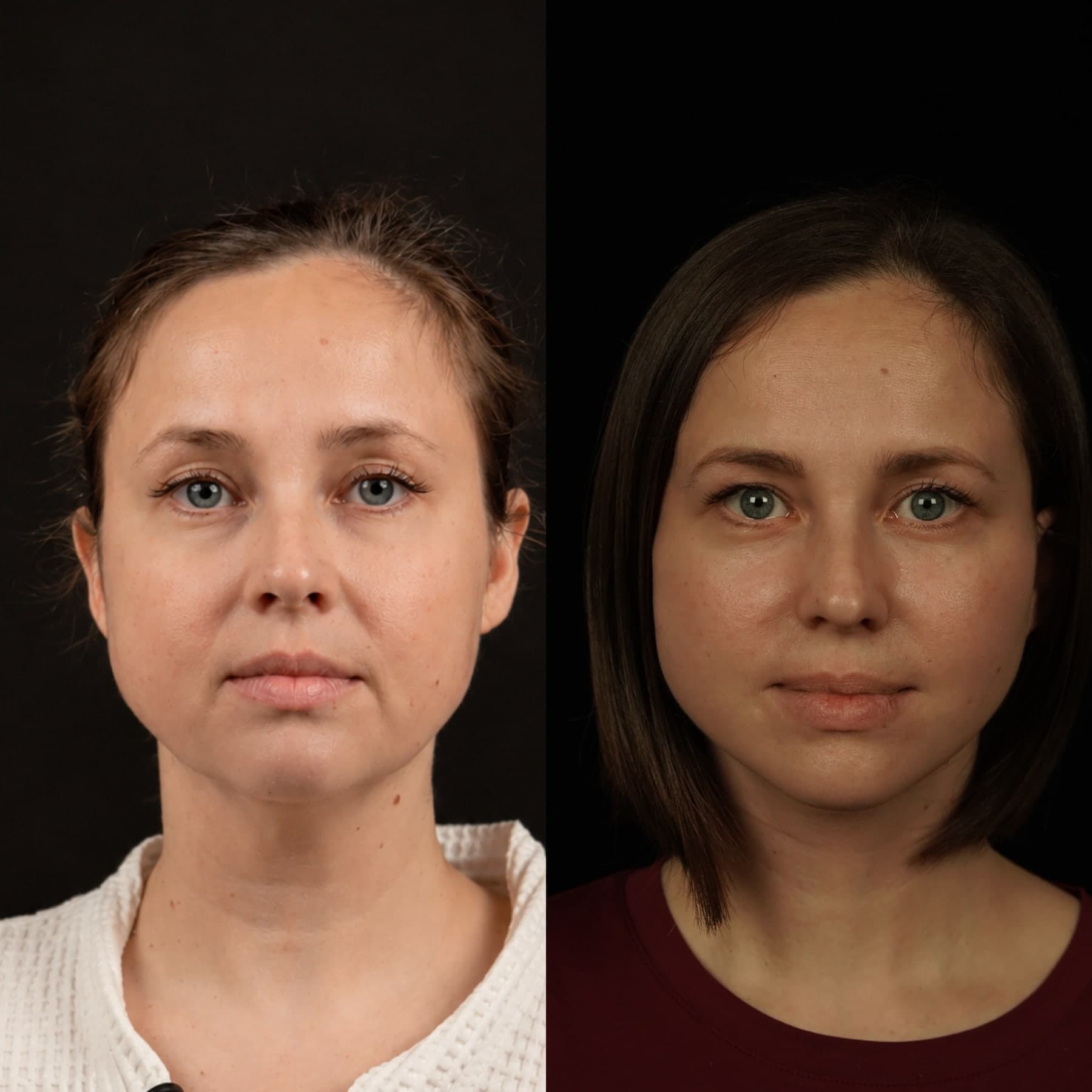
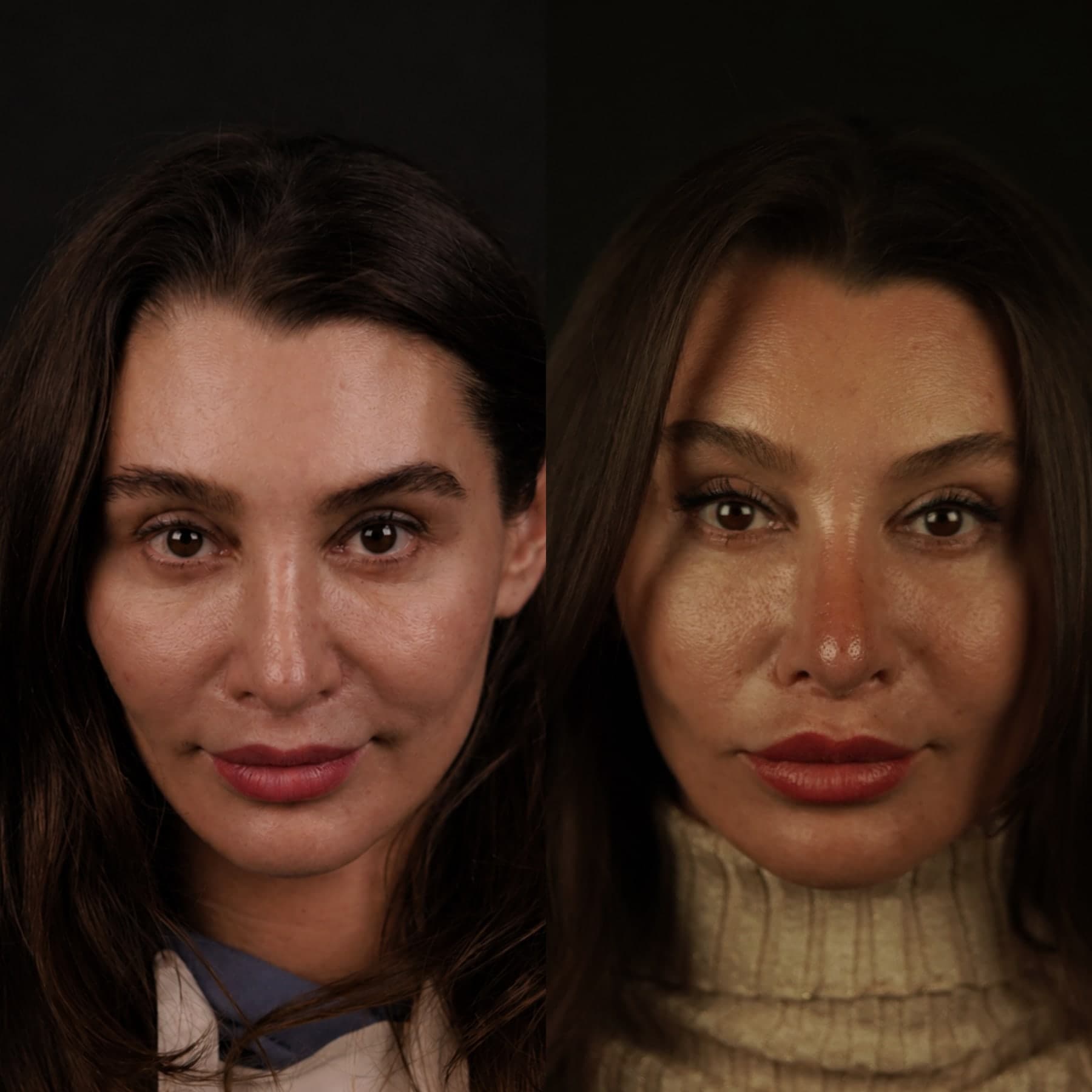
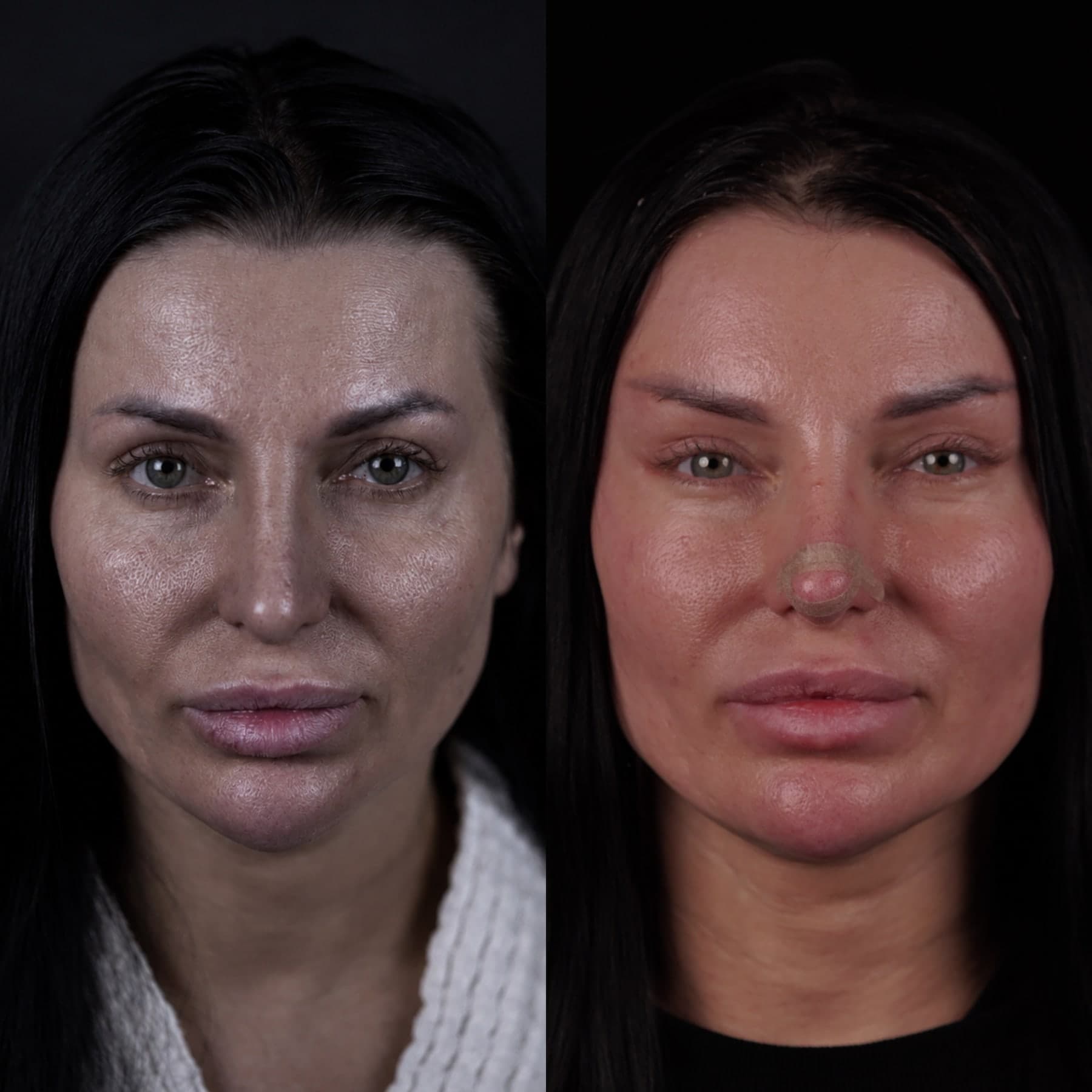
Before and after photos help assess the real results of facelifts for men and understand how natural rejuvenation can look after surgery. The photos show changes in the facial contour, jawline, chin area, neck and overall facial expression.
It is important to compare not only the degree of rejuvenation but also how well the patient's individuality is preserved. A good result should not look like a drastic change in appearance. The face becomes fresher and the contours sharper, but the masculine features and natural expressions remain.
At the consultation the doctor can show examples of results, explain what is possible in your case and describe the factors that affect the outcome after recovery.
 Before / After
 Before / After
 Before / After
Facelift for men:
cost
The cost of a facelift for men is individual, because the extent of surgery differs from patient to patient. The price depends on the degree of age-related changes, the chosen technique, the need for neck correction, work with the deep tissues and any combination with other operations.
The exact cost can only be determined after an in-person consultation. The doctor will carry out an examination, assess the tissues, discuss the desired result and draw up an individual surgical plan. Below are guide prices by technique; the cost of the chosen extent of the lift for a man is calculated individually.
The cost may depend on:
- The extent of the surgery
- The complexity of the anatomy
- The need for neck or chin correction
- Combination with blepharoplasty or other operations
- Type of anesthesia
- Stay in the clinic
- Post-operative monitoring
Why patients choose
Dr. Yusifzade
Dr. Rauf Yusifzade specializes in aesthetic facial surgery and plans each operation individually. In a male facelift it is especially important to consider the anatomy, skin density, hairline, jaw definition and the patient's expectations.
The focus is on a natural result without a mask effect and without changing masculine features. The surgery is planned so that the face looks younger, fresher and more harmonious while keeping its character and individuality.
Patients choose Dr. Yusifzade for the attentive approach, a detailed consultation, careful planning, a strong sense of facial aesthetics and support at every stage, from preparation to recovery.