


Cheek lift
in Moscow
A cheek lift in Moscow with Dr. Rauf Yusifzade is a surgical correction of the midface aimed at rejuvenating the under-eye area, cheeks and cheekbones. The surgery helps give the face a fresher, more rested look without a strongly pulled effect.
The technique suits patients who have developed malar bags or pronounced tear troughs, whose nasolabial folds have deepened, or whose midface has started to look heavier. A cheek lift works not only with the skin but also with the deep tissues, so the result looks natural and lasts a long time.
At the consultation the doctor assesses your anatomy, the condition of the tissues and the extent of age-related changes, and explains which extent of correction is best in your case.
What is a cheek lift
A cheek lift is plastic surgery to rejuvenate the middle third of the face. The main correction area includes the lower eyelids, cheeks, cheekbones and the transition from the eyelid to the cheek.
Unlike superficial cosmetic procedures, a cheek lift acts on the tissues that shift downward with age. Because of this the face can look tired even when the person feels well and sleeps enough.
In a cheek lift the surgeon repositions and fixes the descended soft tissues of the cheeks and cheekbones. The main goal is to restore the position of the midface tissues and make the transition from the lower eyelid to the cheek smoother.
In some cases an endoscopic approach is used. The endoscopic method lets the surgeon work through small access points and monitor the operation with special optics. This makes the surgery less traumatic and the recovery period more comfortable. More about the access method: endoscopic facelift.
What a cheek lift
can correct
A cheek lift suits the correction of age-related changes concentrated in the midface. This is usually the area that first starts to show tiredness: bags appear under the eyes, the cheeks lose firmness and the transition from the lower eyelid to the cheek becomes sharper.
The surgery helps with several goals:
- Reduce malar bags and puffiness in the under-eye area
- Make the transition between the lower eyelid and the cheek smoother
- Lift the tissues of the cheeks and cheekbones
- Visually refresh the look
- Reduce the depth of the nasolabial folds
- Correct sagging soft tissue in the midface
- Improve the overall relief and contours of the face
The main goal of a midface lift is not to change your appearance but to return the tissues to a more natural position. With proper planning, the result does not look "overdone". The face becomes fresher but keeps its individual features.
Who is a candidate
for a midface lift
A midface lift most often suits patients whose age-related changes are mainly in the cheeks, lower eyelids and cheekbones. On average people consider this surgery after 35-40, but age is not the main criterion. The condition of the tissues, the anatomy and the degree of ptosis matter more.
A cheek lift may be recommended if you notice:
- The face looks tired even after rest
- Bags or puffiness have appeared under the eyes
- The tissues of the cheeks have descended
- The cheekbones have become less defined
- The nasolabial folds have deepened
- A pronounced tear trough has appeared
- The lower eyelid visually separates from the cheek
- The midface has lost volume and firmness
The surgery may also be considered after an unsuccessful or insufficient lower eyelid correction, if there is a "round eye" effect or tissue descent in the under-eye area.
If age-related changes affect not only the middle but also the lower third, the doctor may suggest a combined correction plan, for example together with blepharoplasty, a facelift or other techniques.
Contraindications
to a cheek lift
Although a cheek lift is one of the less invasive plastic surgery techniques, it is a full operation. That is why it is important to rule out conditions in which surgery may be unsafe before the procedure.
The surgery is not performed in cases of:
- Acute infectious diseases
- Flare-ups of chronic illnesses
- Blood clotting disorders
- Severe heart and vascular diseases
- Decompensated diabetes
- Cancer
- Pregnancy and breastfeeding
- Inflammation or damage to the skin in the surgical area
- Severe neuropsychiatric disorders
- Unsatisfactory pre-operative test results
Some contraindications are temporary. For example, if the patient has a cold, an inflammatory process or a flare-up of a chronic disease, the surgery is postponed until full recovery. At the consultation the surgeon takes a detailed medical history, asks about the medications you take and orders an examination.
At the consultation the surgeon takes a detailed medical history, asks about the medications you take and orders an examination. This is necessary so that the cheek lift is not only aesthetically effective but also safe for the patient.
Preparing
for surgery
Preparation begins with a consultation. The doctor assesses the condition of the midface, discusses the expected result and chooses the correction method. Tests and examinations are then ordered.
The standard list includes:
- Complete blood count and blood chemistry
- Coagulation panel
- ECG
- Chest X-ray
- Consultation with a general practitioner
A few days before surgery it is important to avoid alcohol, smoking and medications that affect blood clotting. This lowers the risks during surgery and speeds up recovery.
How the surgery
is performed
A cheek lift is performed in an operating room and requires careful preparation. Before the procedure the doctor marks the face, taking into account the anatomy and the direction in which the tissues will be moved. This makes the most natural result possible.
The surgery is performed under general anesthesia or sedation, depending on the extent of the correction. Endoscopic access through the lower eyelid or temple area is used most often. The incisions are minimal and placed in the natural skin folds.
Stages
of the surgery
A cheek lift is performed in stages:
Small incisions are made in the lower eyelid or temple area
Endoscopic equipment is inserted
The soft tissues are carefully separated and moved upward
Sagging is corrected and the fat pads are redistributed
The tissues are fixed in their new position
Cosmetic stitches are placed
Thanks to targeted work with the tissues, the surgeon preserves natural facial expressions. If needed, the surgery can be combined with other rejuvenation methods.
Recovery
after a cheek lift
Recovery after a cheek lift is relatively quick compared with classic lifting methods. Swelling and bruising are possible in the first days - this is a normal reaction of the body.
The first changes become visible as the swelling goes down, and the final result forms gradually.
The first days after surgery
For the first 2-3 days the patient may stay under observation. Possible effects:
- Moderate swelling
- Small hematomas
- A feeling of tightness
This is a natural part of recovery. The doctor gives recommendations that help reduce discomfort and speed up healing.
Restrictions during recovery
During recovery it is important to follow these recommendations:
- Avoid physical exertion
- Do not visit baths, saunas or swimming pools
- Avoid overheating and sun exposure
- Limit active facial expressions
The full recovery period takes 2-4 weeks on average, though most patients return to normal life much sooner.
When the result is visible
The first changes are visible once the swelling has gone. The face looks fresher and the contours become more defined.
The final result forms after 1-2 months, once the tissues have fully adapted to their new position.
What result
a cheek lift gives
A cheek lift achieves a pronounced yet natural rejuvenation. The main effect comes from restoring the position of the tissues, not just from tightening the skin.
After the surgery:
- The midface is lifted
- The nasolabial folds become less pronounced
- The tear troughs are smoothed out
- The shape of the cheekbones improves
- The tired look disappears
The result lasts for several years, and the face does not look unnatural or "overdone".
Combining
with blepharoplasty
A cheek lift and lower blepharoplasty solve different, sometimes overlapping problems. A midface lift deals with descended tissues of the cheeks and cheekbones. Excess skin and fat bulges of the lower eyelid are assessed as part of lower blepharoplasty. The choice of combination depends on the examination.
This approach makes it possible to:
- Remove under-eye bags
- Remove excess skin
- Correct the transition from the eyelid to the cheek
- Enhance the overall rejuvenating effect
Puffiness of the lower eyelid and puffiness above the cheekbone cannot be treated as the same problem. At the examination the doctor determines which tissues form the contour and whether one operation is enough. Combined correction is only needed when there are corresponding indications.
Photos
before and after
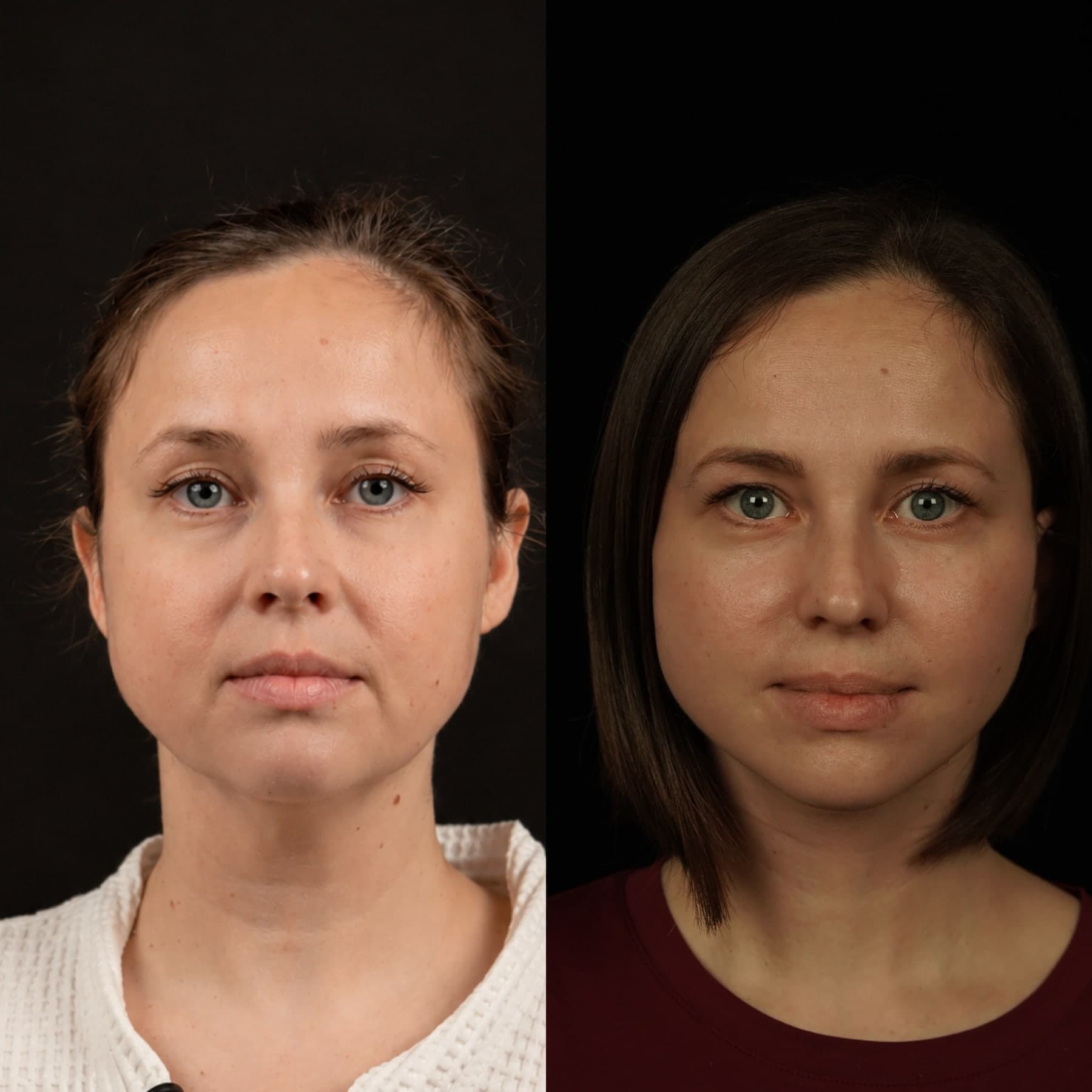
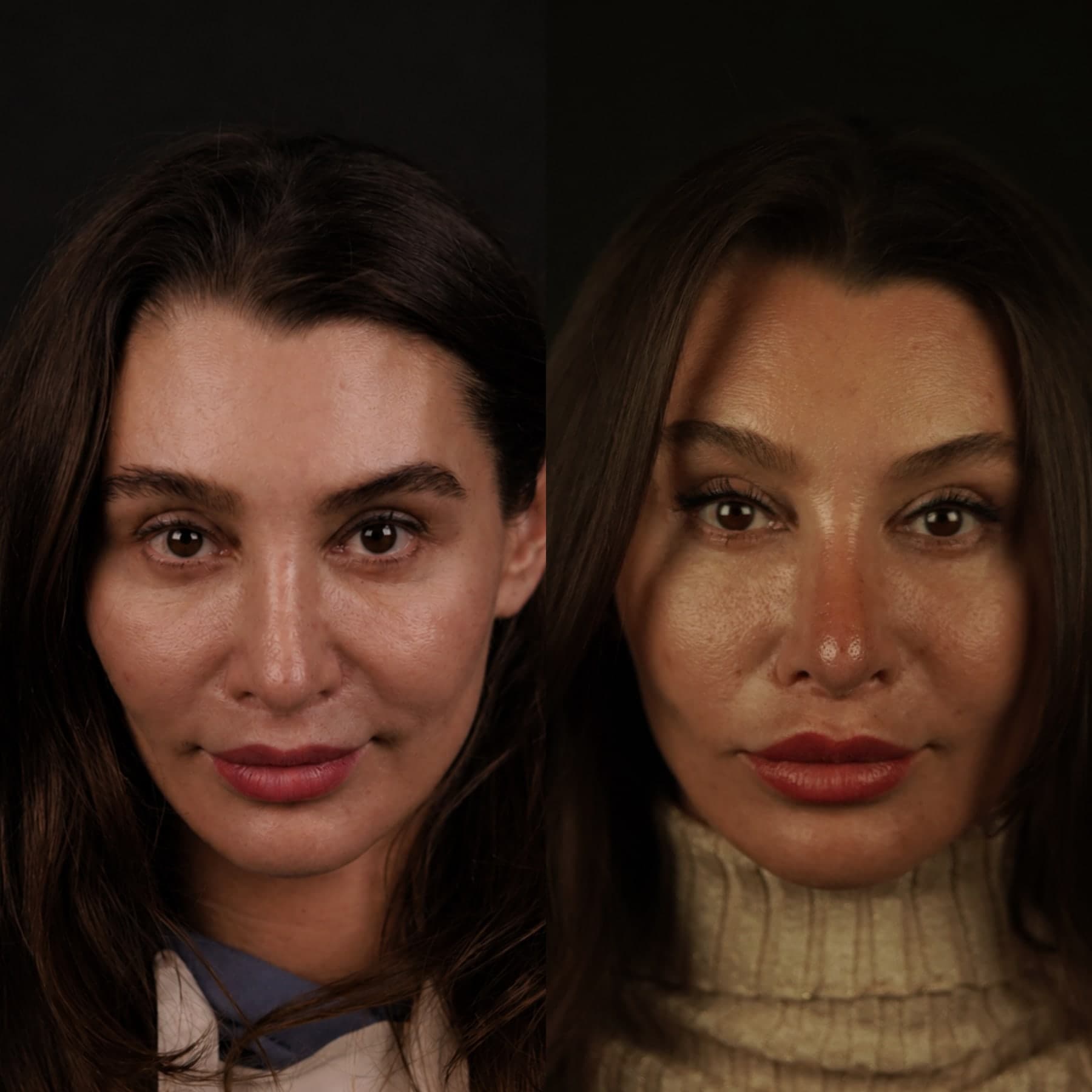
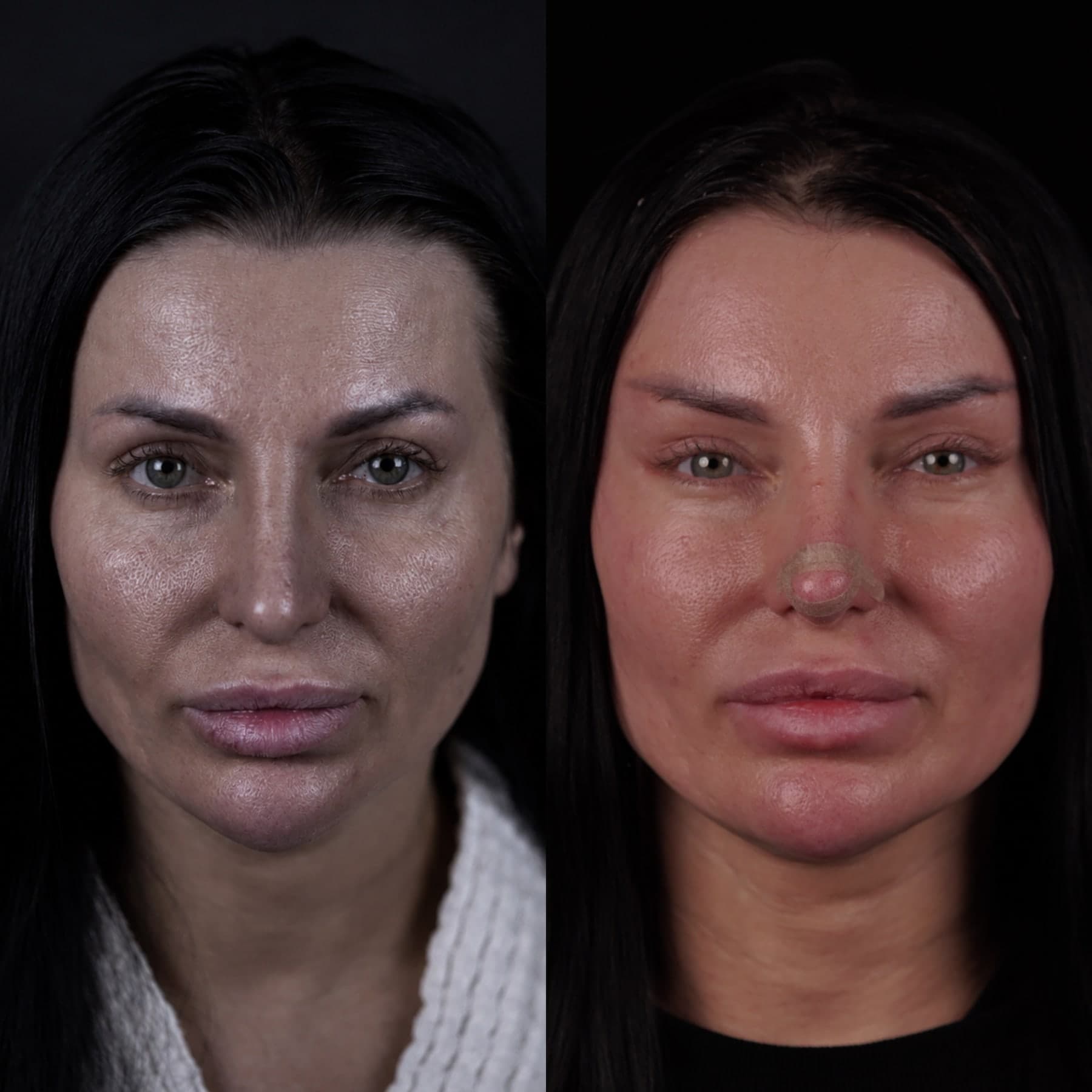
Before and after photos help assess the real results of a cheek lift. They show how the midface changes: puffiness decreases, the transition between the eyelid and the cheek becomes even, and the cheekbones become more defined.
This lets the patient understand in advance what effect to expect.
 Before / After
 Before / After
 Before / After
How much does
a cheek lift cost
Many patients ask how much a cheek lift costs. The cost depends on the extent of the correction, the complexity of the case and the chosen technique.
Other factors are the need to combine it with other operations, the clinic and its equipment, the type of anesthesia and the length of the hospital stay.
The exact price can only be determined after a consultation. The doctor assesses the condition of the tissues and proposes the best correction plan.
Why patients choose
Dr. Yusifzade
Patients choose Dr. Yusifzade for his combination of experience, attentive approach and modern techniques.
Advantages:
- Individual surgical planning
- Use of endoscopic technology
- Work with the anatomy, not just the skin
- A natural result without overcorrection
- Support at every stage
The clinic creates comfortable conditions for the patient, from the first consultation to the end of recovery.